Art Therapy
in Chicago, IL
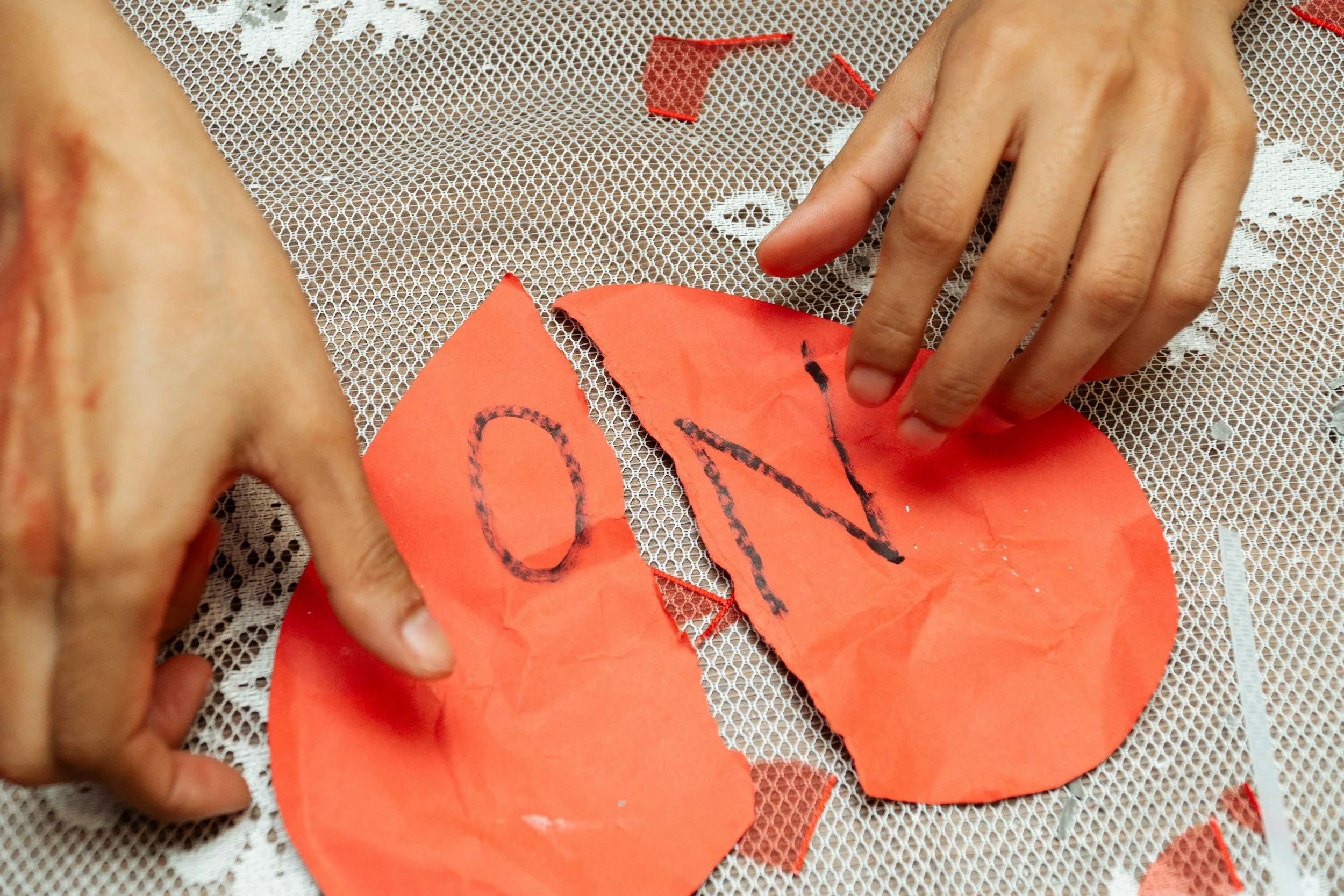
Is Your Inner World Feeling Heavy, Tangled, Or Hard To Put Into Words?
Do you struggle to find the words for overwhelming waves of anxiety, chronic stress, or deep-seated grief?
Are you tired of overthinking in your head, only to feel increasingly disconnected from your physical body?
Does it feel like your emotions are running the show, leaving you searching for a safe, constructive release?
Do you feel a heavy, invisible pressure throughout your day, wondering why standard talk therapy hasn’t given you the breakthrough you need?
Maybe you struggle with a constant sense of hyper-vigilance—an internal buzzing that keeps you up at night—or a deep emotional numbness that makes it impossible to feel present in your own life. You might spend hours trying to rationalize your fears or analyzing your problems with friends, only to realize the underlying ache remains entirely unchanged.
Even when you logically understand that you are safe and that your anxieties are overblown, your nervous system treats your emotions like an active, physical emergency. No matter how hard you try to think your way out of panic, sadness, or burnout, language falls short. This leaves you trapped in a frustrating cycle of exhaustion, wondering why you can’t simply "reason" your way into feeling better.
Because this internal battle takes up so much of your everyday cognitive energy, you feel utterly depleted, isolated from the people you love, and disconnected from your authentic self.
When Emotional Strain Collects In The Body, It Changes How You Live
When you live with unresolved emotional distress, chronic burnout, or psychological trauma, the toll on your daily life is massive. It spills over into your physical well-being and daily functioning, frequently showing up as:
Physical exhaustion: Facing chronic stress, muscle tension, headaches, and disrupted sleep patterns that leave you running on empty.
Strained relationships: Navigating emotional numbness, irritability, or an inability to feel genuinely connected to your partner, family, or friends.
A shrinking world: Avoiding creative, vulnerable, or spontaneous moments out of a subconscious fear of being emotionally overwhelmed.
On top of that, the social pressure to always "have it together" can force you to hide your suffering in plain sight. You might show up to work looking perfectly composed and highly successful, while internally navigating a chaotic storm of thoughts and feelings. This profound split between how you look on the outside and how you feel on the inside creates a deep, exhausting sense of loneliness.
Through specialized expressive therapy sessions, you can learn to reveal what words alone cannot reach, untangling your thoughts and reclaiming your internal peace of mind.
Have a Question or Want to Schedule a Consult? Reach Out!
Common Myths and Realities of Art Therapy
It is incredibly common to hesitate before reaching out to a specialized clinical practitioner. For many, utilizing visual materials conjures up uncomfortable memories of grade-school classrooms, rigid judgments about talent, or the belief that creative expression is reserved solely for professional artists. Popular culture frequently misrepresents this clinical profession, reducing it to a simplistic arts-and-crafts session or a coloring book used merely to pass the time.
These widespread misconceptions do a profound disservice to what is actually an evidence-based psychotherapeutic intervention. It is not about making a masterpiece, nor is it a test of your technical skill. It is an intentional mental health therapy that integrates psychological theory with the transformative power of visual and tactile media.
You Do Not Need An Ounce Of Artistic Skill To Heal
In fact, coming to a session without an artistic background is often a major advantage. When you lack formal training, you are less focused on the final product and more available to engage with the actual process of creation. There is no grid to follow, no grade to earn, and no judgment to fear.
Art Therapy works because it actively bypasses the language centers of the brain. Neuroscientific research demonstrates that traumatic memories, chronic anxieties, and intense emotional stressors are frequently stored in the right hemisphere of the brain and the lower somatic nervous system—areas that communicate through images, sensations, and feelings rather than syntax and grammar.
By utilizing paints, clay, oil pastels, or collage materials, we provide an alternative, non-verbal vocabulary. When you give an abstract feeling a concrete shape, color, or texture, you externalize it. The pain is no longer trapped inside your body; it sits safely on a piece of paper or a sculpting board in front of you. This therapeutic distance allows you and your clinician to examine your experiences objectively, in a way that may reduce your nervous system's alarm responses.

Moving Forward to Reclaim Your Authentic Self
While traditional talk therapy is incredibly valuable for processing logic, gaining insights, and building foundational coping skills, it can sometimes feel like you have hit a plateau where you intellectually understand your struggles but still carry the emotional weight in your body.
Our clinicians at Leap Therapy Chicago offer an integrative path forward that complements and expands upon your verbal processing. We provide a compassionate, safe, and non-judgmental environment where creative expression serves as a powerful partner to standard talk therapy—unlocking new avenues for self-discovery, trauma processing, and somatic regulation.
Developing a clear verbal understanding of your challenges provides an essential foundation, but anchoring that logic within a creative, hands-on process allows your nervous system to move from simply understanding safety to genuinely feeling it.
What You Can Expect In Our Clinical Sessions
Entering a therapy room can feel intimidating, especially when introducing a creative component. We never force you into the deep end, nor do we expect you to create without direction. Our process is highly collaborative, respectful, and entirely tailored to your unique comfort levels and pacing.
The Initial Assessment: During our first few sessions, we map out how emotional distress manifests in your life. We may look at your primary stressors, your current coping mechanisms, and what you hope to achieve. Together we outline a safe therapeutic roadmap.
Gathering and Selecting Materials: You can choose the medium(s) that you are most comfortable using and your clinician will guide you toward specific media based on your goals and therapeutic needs. You will be provided with the opportunity to work with a wide variety of materials ranging from watercolors, oil pastels, and clay, to found objects and pipecleaners.
The Creative Process: There is no right or wrong way to engage with the art materials. Your clinician will provide a steady and grounding presence, along with art making prompts to support you in externalizing your thoughts and emotions.
Reflective Dialogue: Reflective Dialogue can happen while making art or when you are ready to pause your creative making and transition into verbal processing. There is never any pressure to finish a piece or create a complete project. Your clinician will ask open-ended questions to help you explore your own visual and tactile choices, helping you safely connect your creative insights back to your daily life.
Our Integrative Clinical Frameworks
To ensure your care is effective, our clinicians utilize various interventions and techniques along with psychological modalities such as:
Somatic Expressive Therapy: Tracking how emotions live physically in your body and using the sensory nature of media to release trapped physical tension.
Cognitive-Behavioral Intervention Layers: Using visual media to identify, externalize, and challenge unhelpful thought loops and core beliefs that keep you stuck in anxiety or depression.
Mindfulness-Based Focus: Anchoring your awareness fully in the present moment through the tactile rhythms of creative making, effectively down-regulating a hyperactive nervous system.
Acceptance and Commitment Therapy Integration: Visually clarifying your core values so you can commit to meaningful life changes, learning to accept complex thoughts without letting them dictate your actions.
But You May Still Have Questions About Art Therapy...
What if I am completely unartistic or uncreative?
This is a common concern and it is completely normal to feel that way. You do not need any prior art experience, technical skill, or creative background to benefit from this work. The focus of this care is entirely on the process of creating and expressing, not on the aesthetic quality of the final product. Stick figures, simple shapes, color fields, and messy clay forms can all be deeply valuable pieces of therapeutic expression.
Will we talk during the session, or is it completely silent?
Our sessions are a fluid blend of creative expression and verbal reflection. Some days, you may need to spend the majority of your time talking through a current crisis or checking in with your clinician. Other days, you might spend twenty to thirty minutes quietly immersed in materials before we discuss what surfaced. We adjust the balance of making and verbal therapy in every session to match what you need that day.
Will you be analyzing my artwork or diagnosing me based on what I make?
Not at all. We do not judge your creations or try to read your mind based on what you draw. We never make assumptions or assign hidden clinical meanings to your work. You are the ultimate expert on your own inner world. Our role is to look at the piece with you, asking simple, open-ended questions to help you explain and understand what the visual symbols mean to you.
An Invitation to Connect and Heal Differently
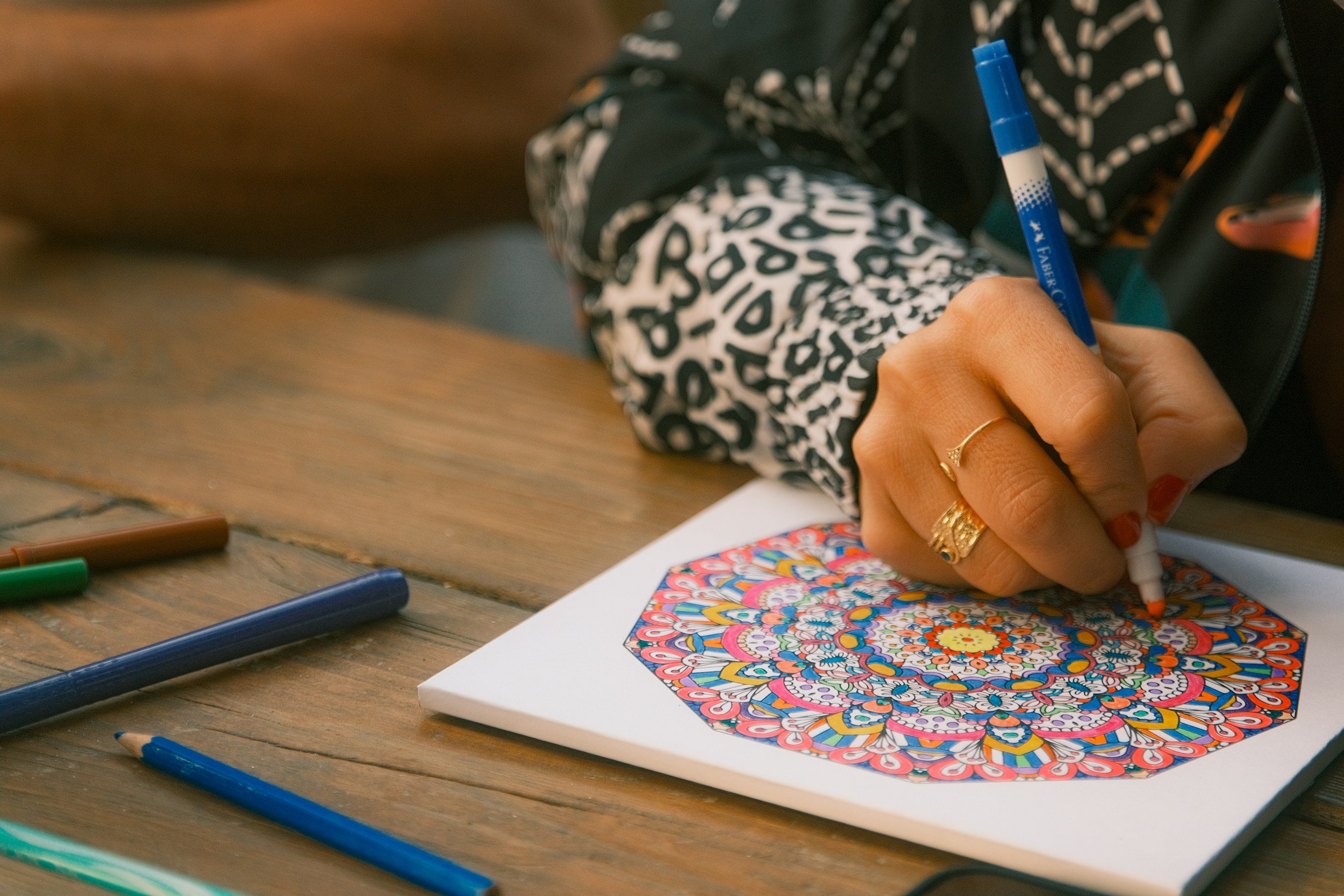
When you are exhausted from overthinking, art therapy offers a tangible way to move through your pain rather than running in analytical circles. You do not have to carry the burden of figuring out the right words to use. The creative process itself serves as your alternative vocabulary on your journey toward true somatic relief and internal balance.
Discover the right fit for your unique needs.
Connect with a therapist who specializes in Art Therapy:
Disclaimer: The information provided on this website is for educational and informational purposes only and does not constitute medical, psychological, or psychiatric advice, diagnosis, or treatment. Accessing this site does not establish a therapist-client relationship. Leap Therapy Chicago provides routine, outpatient counseling designed to support long-term mental wellness and personal growth. Please note that our practice does not offer higher-level medical care, intensive outpatient program (IOP) tracking, emergency crisis services, medication management, or court-mandated reporting.
Emergency & Crisis Resources: If you or someone else is in immediate danger or experiencing a medical or psychiatric emergency, call 911 or go to the nearest emergency room. For free, confidential, 24/7 mental health support, emotional distress, or suicidal thoughts, contact the Suicide & Crisis Lifeline by calling or texting 988.